Field Work
Wynwood
Chronicles.
Chromatic Archaeology · Miami · May 2016
Before the doors closed.
Before the walls were repainted.

The Premise
My first time in Wynwood was May 2016 — I had no memory of the place before, only the photographs of what I found.
Eight months earlier, on 24 September 2015, the City of Miami had adopted Ordinance No. 13561 — the NRD-1 rezoning — converting Wynwood from light-industrial to mixed-use. Galleries — once close to seventy — began to thin. Studios were sold. Murals were painted over. Commerce moved in, then moved out again. By 2021, only fifteen galleries remained.
I did not come to celebrate the murals. I came to document what the city was preparing to erase: the storefronts that would close, the surfaces that would be repainted, the artists who signed in 2014 and were already being painted over by 2016.
This is an archaeology. Not a promotion.
Wynwood Chronicles is a two-tense project. May 2016 — what was there. 2024–2025 — what is no longer there. Between the two: the photographic record of a neighborhood becoming something else.
I photograph what the world is about to lose.
The Pivot · 2015 → 2016 → Now
2015.
City of Miami rezones Wynwood from Light Industrial to Mixed-Use. Vertical development becomes legal.
May 2016.
Fews days on the ground. One camera, one lens. The walls as they stood, eight months after the rezoning.
Galleries thinned.
From close to seventy operating in the corridor, to roughly fifteen by 2021. — Miami New Times, 2021.
2024–25.
Same coordinates, looked up via Google Street View and Apple Look Around. Different walls. Different commerce. Different city.
Four Chapters · One Survey
The corridor, organized by what it taught me.
01
Chromatic Monoliths
Single colors. Architectural surfaces. The wall as field.
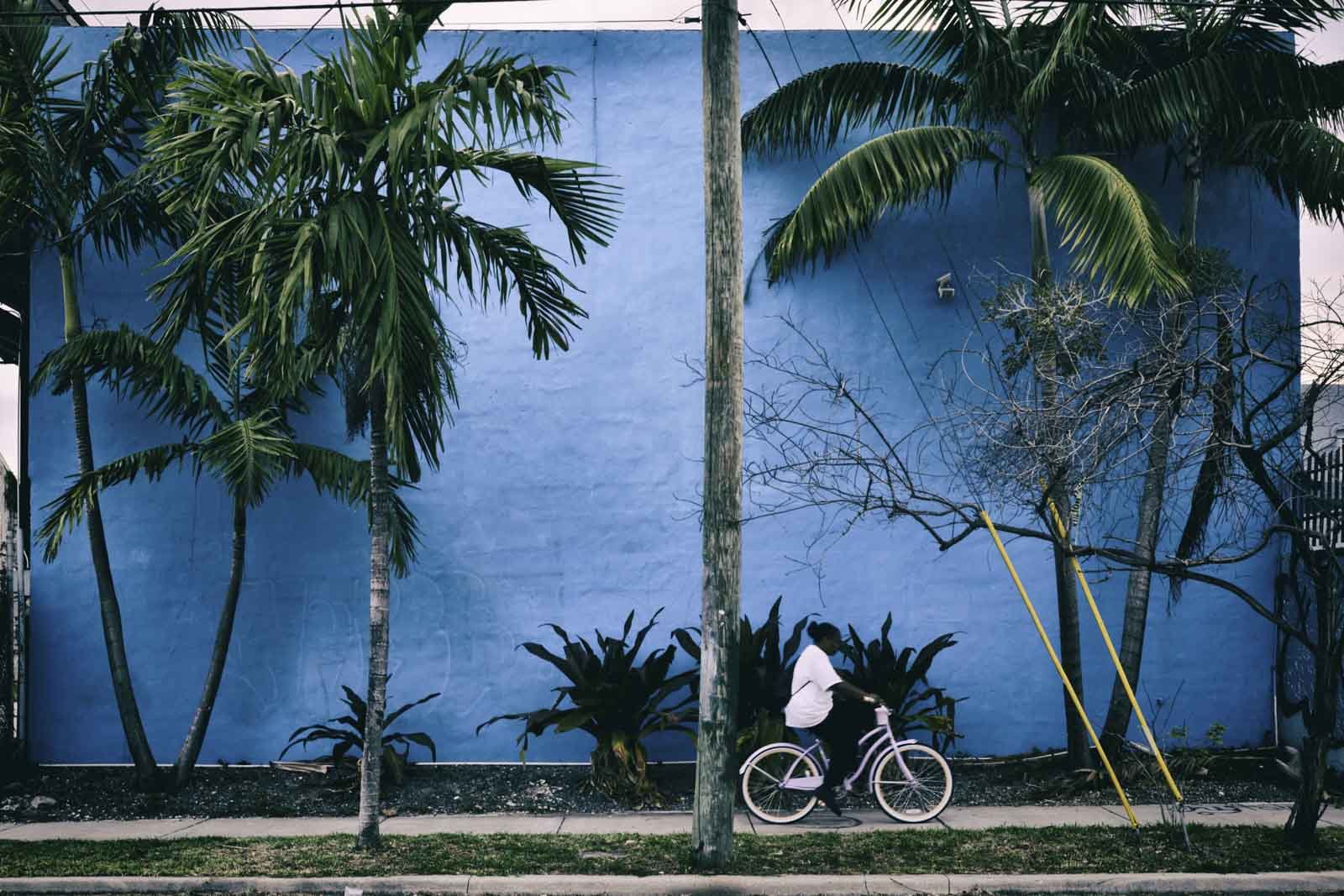
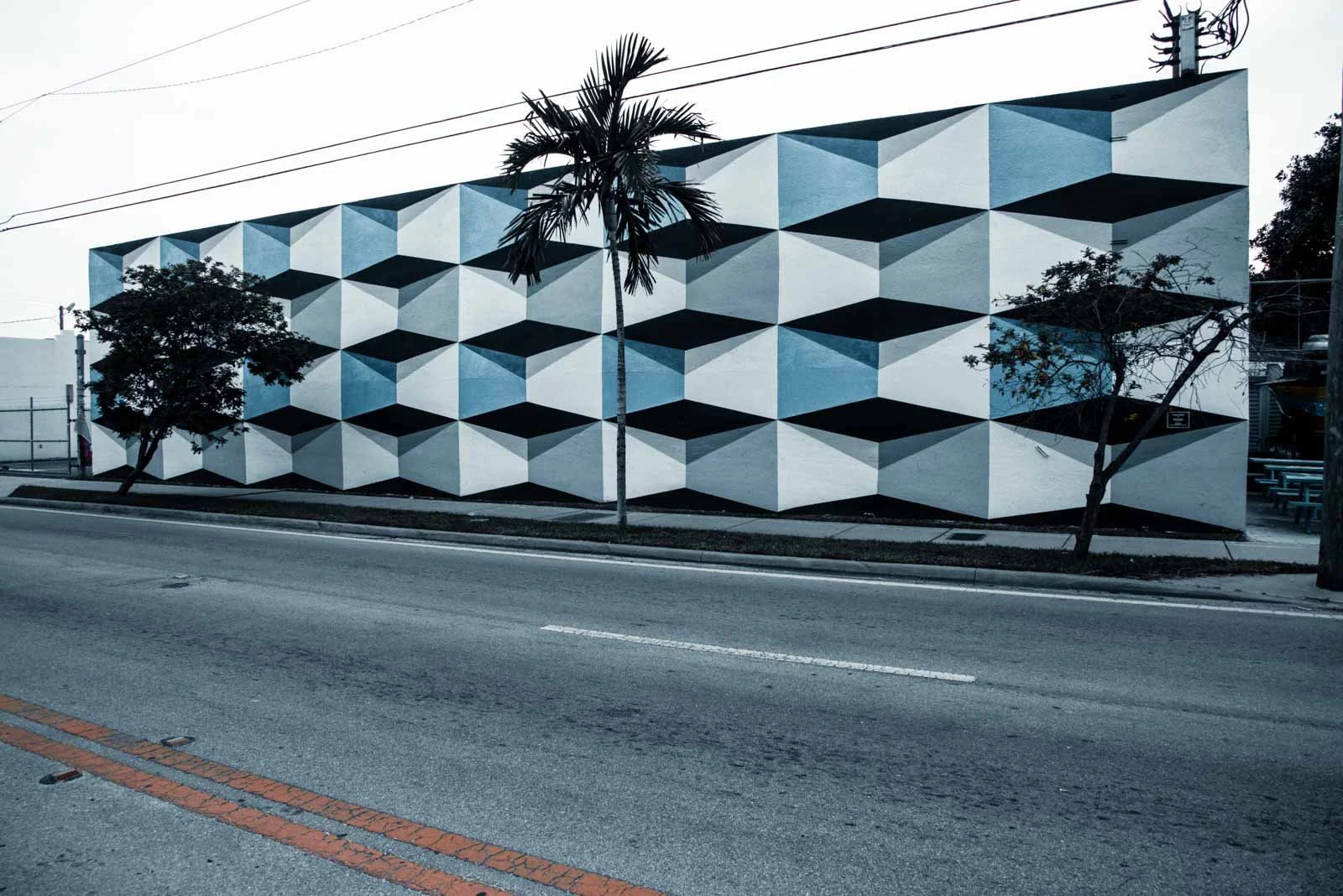
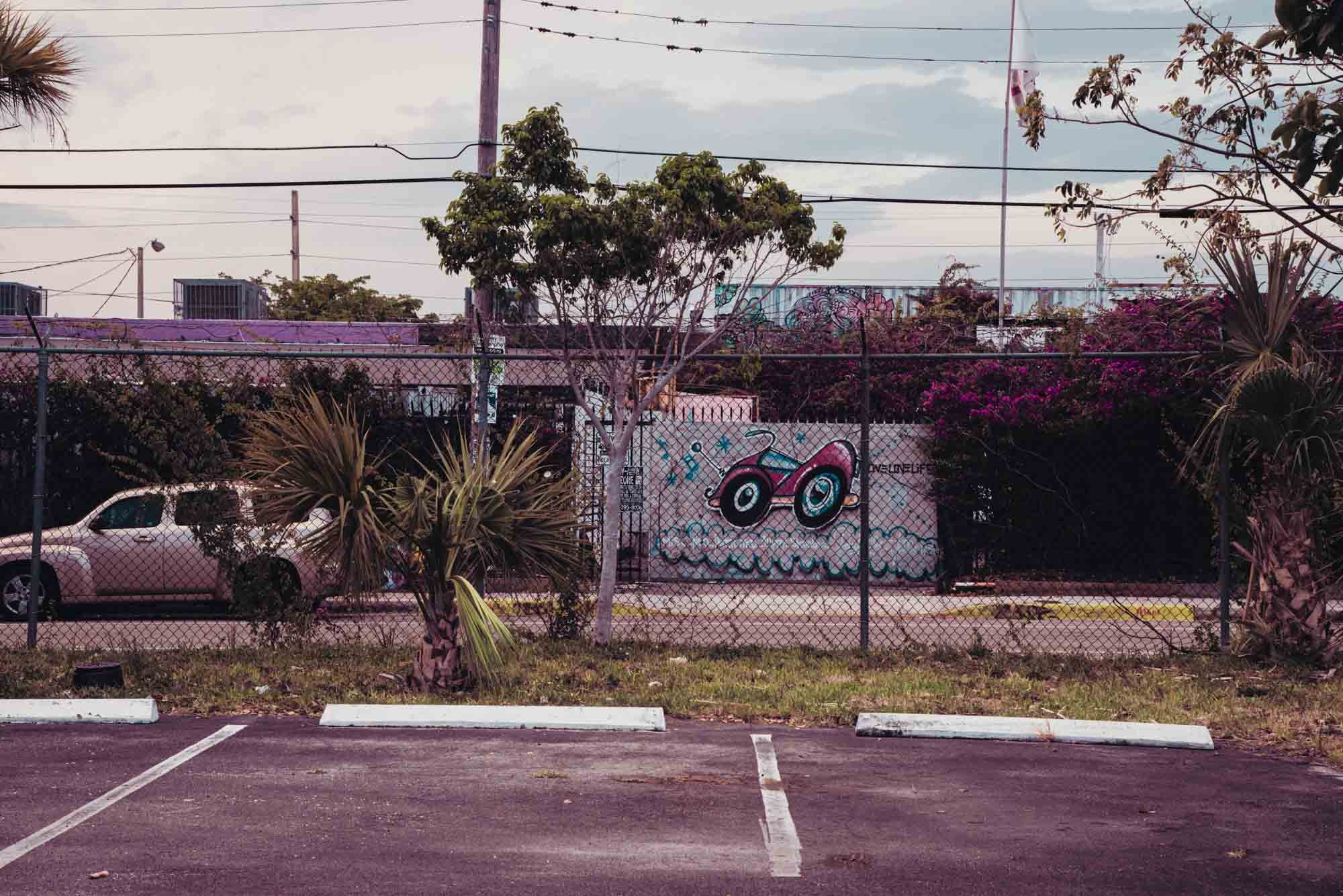
Walls in one tone, encountered as Rothko encountered canvases. Yves Klein blue against a passing cyclist. Ultramarine geometries. Bougainvilliers against a pink cab. Color reduced to architecture; architecture reduced to color.
02
Monochrome Territory
Black, white, silver. Wynwood's other palette.
Beneath the chromatic surface, a quieter Wynwood: industrial doors, abandoned Cadillacs, railway crossings, numbered facades. The neighborhood as the Bechers might have read it — typology, not spectacle.
03
Urban Artifacts
Objects, fences, surveillance. The street's voice without the artist.
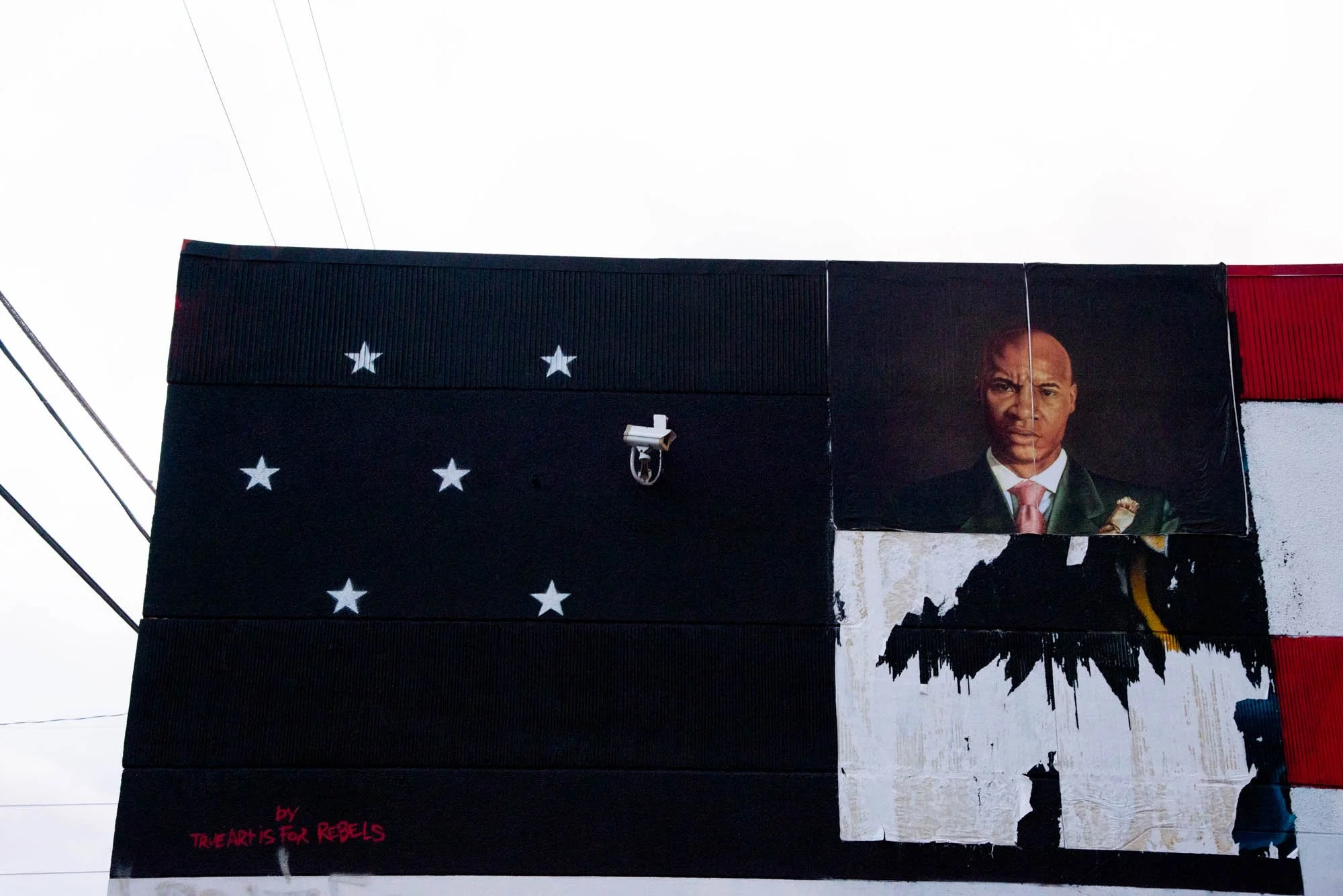
Empty parking lots, shoes hanging from wires, security cameras under stars, parking shutters, vehicles caught in light. The infrastructure that frames the murals and outlasts them.
04
Signs & Typography
The vernacular alphabet of the street. Walker Evans, refracted.
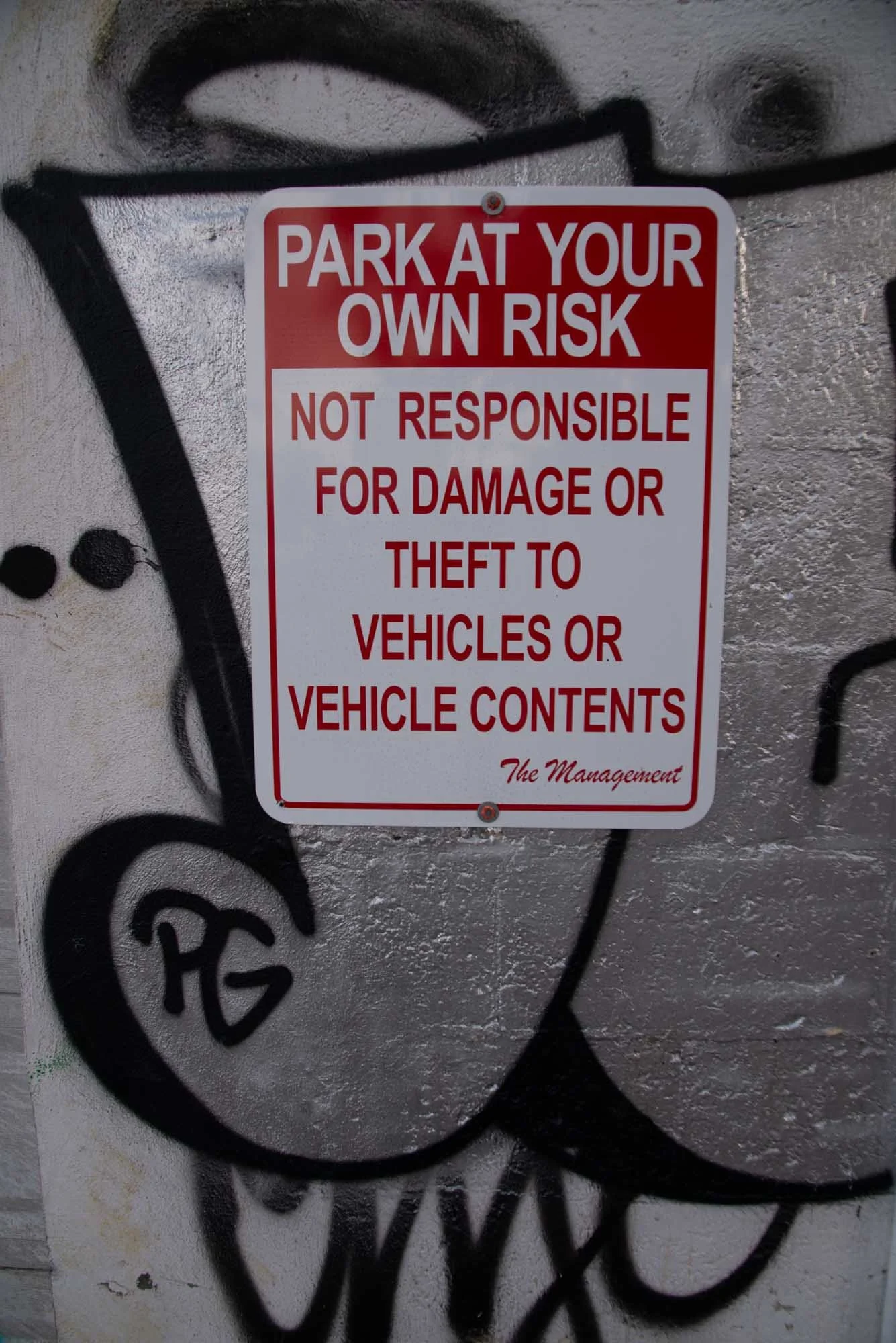
"BE WHAT YOU DREAM." "PARK AT YOUR OWN RISK." Numbers. Arrows. One-way signs collaged with stickers. The literal language of a neighborhood, recorded as it spoke before it was edited.
Chapter 01 · Chromatic Monoliths
Single colors. Architectural surfaces. The wall as field.
Walls in one tone, encountered as Rothko encountered canvases.
Yves Klein blue against a passing cyclist. Ultramarine geometries. Bougainvilliers against a pink cab. Color reduced to architecture; architecture reduced to color. These are the murals stripped of narrative — the chromatic ground on which everything else, in 2016, would be painted over by 2024.
Three frames from the corridor.
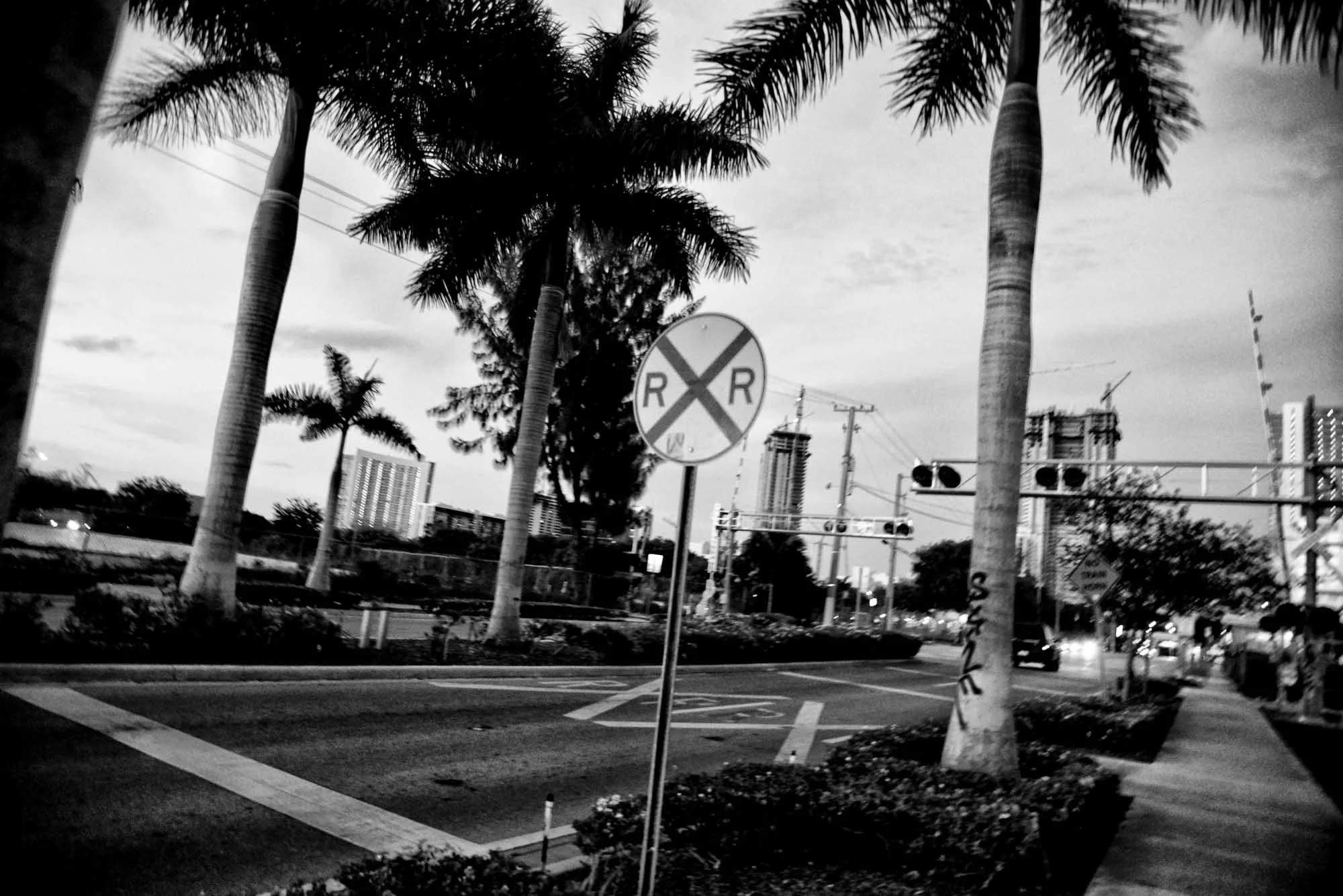
Chapter 02 · Monochrome Territory
Black, white, silver. Wynwood's other palette.
Beneath the chromatic surface, a quieter Wynwood.
Industrial doors, abandoned Cadillacs, railway crossings, numbered facades. The neighborhood as the Bechers might have read it — typology, not spectacle. The infrastructure that the murals decorated, photographed without them.
Three frames from the quieter side.

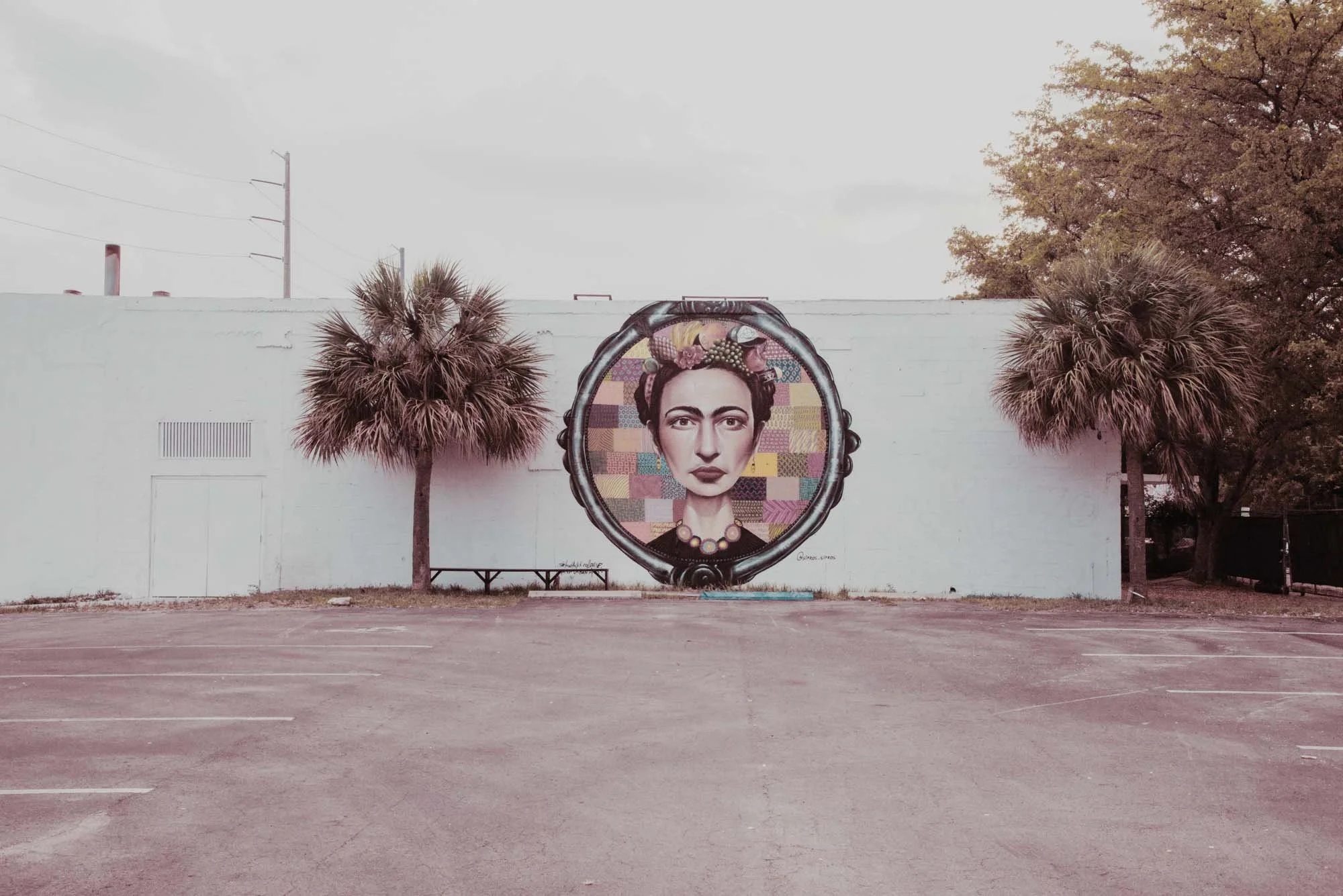
Chapter 03 · Urban Artifacts
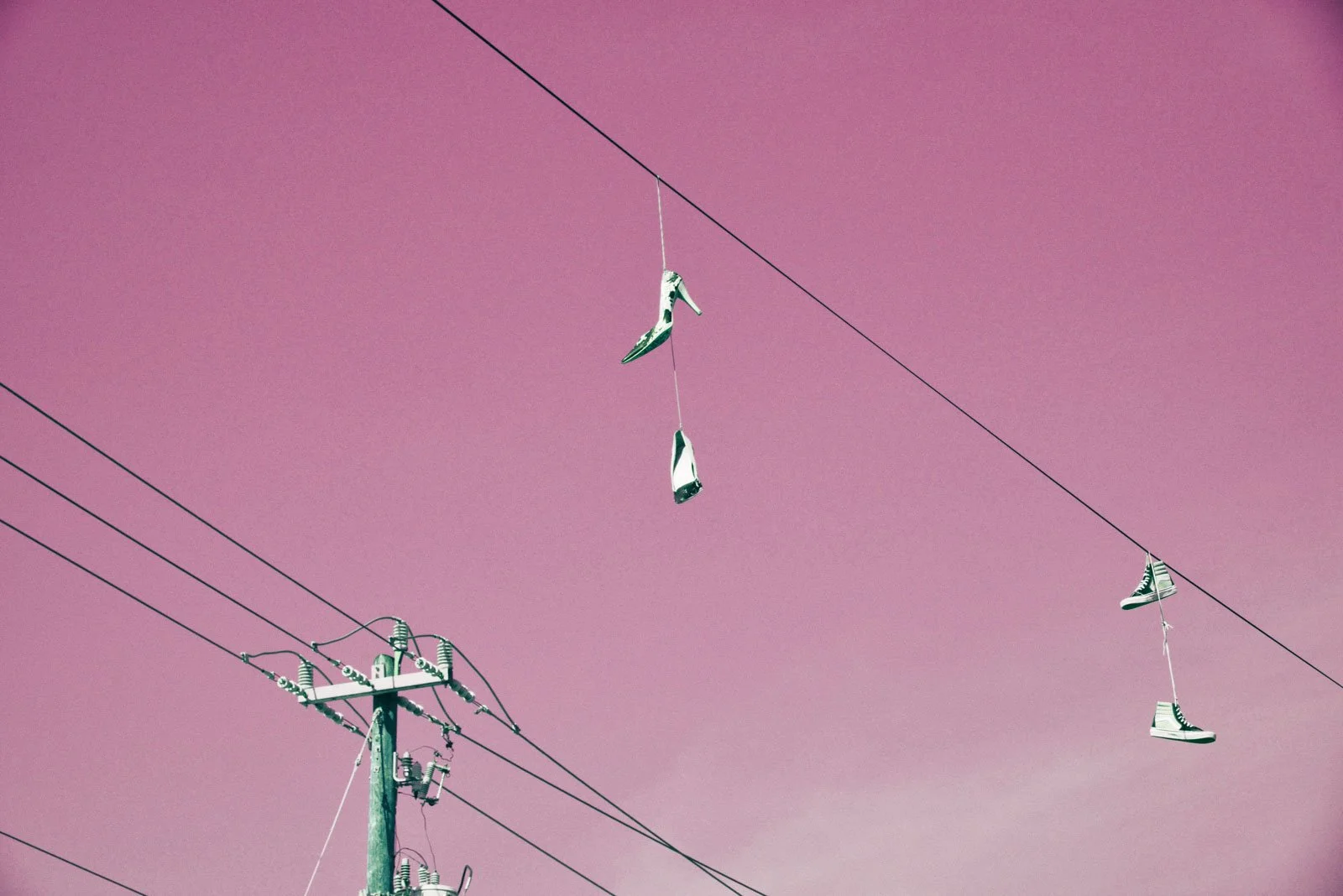
Objects, fences, surveillance. The street's voice without the artist.
Empty parking lots, shoes hanging from wires, security cameras under stars.
Parking shutters, vehicles caught in light. The infrastructure that frames the murals and outlasts them — the mute witnesses of a corridor in transition. What was there before the artists arrived. What remained after they left.
Three frames from the in-between.

Chapter 04 · Signs & Typography
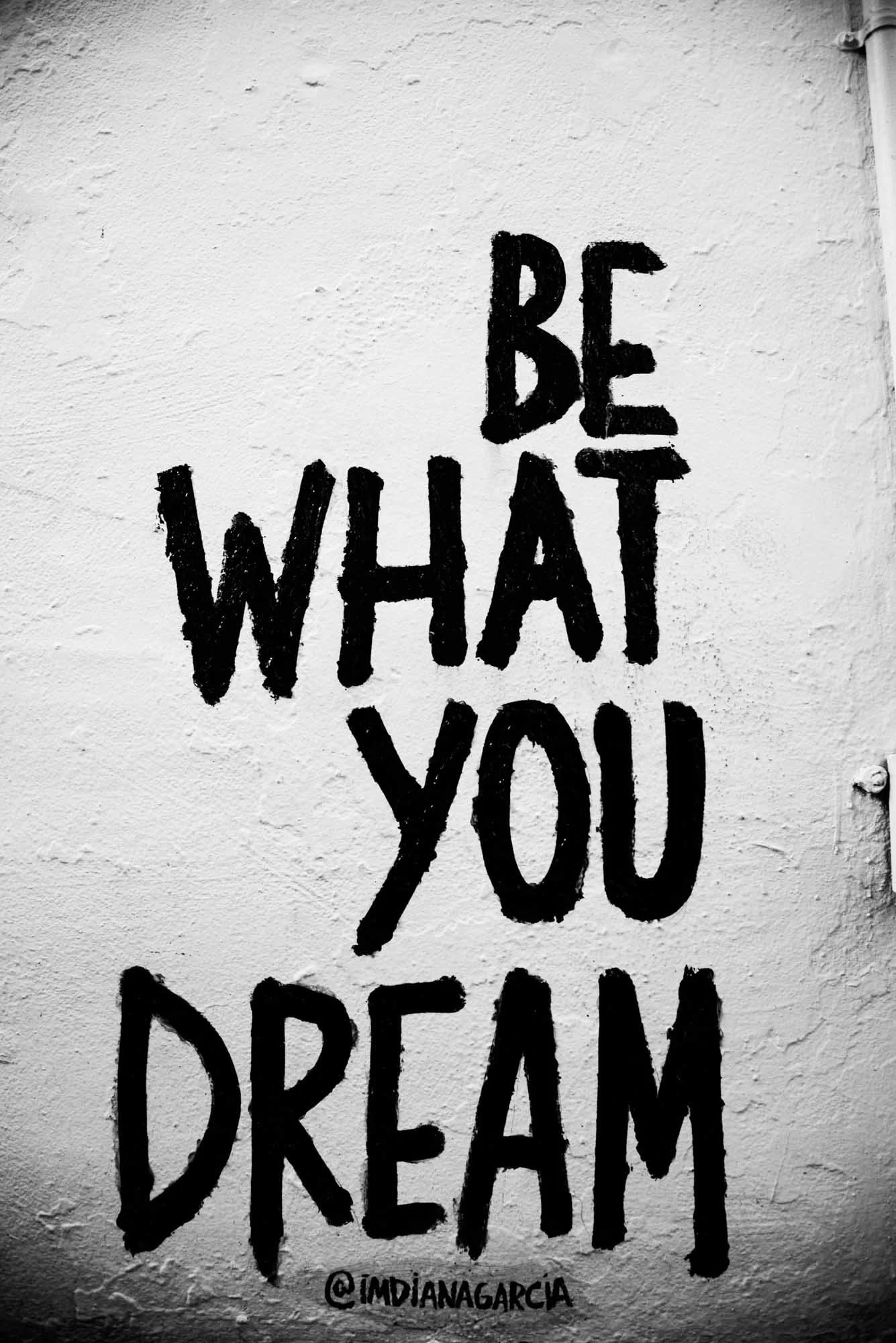
The vernacular alphabet of the street. Walker Evans, refracted.
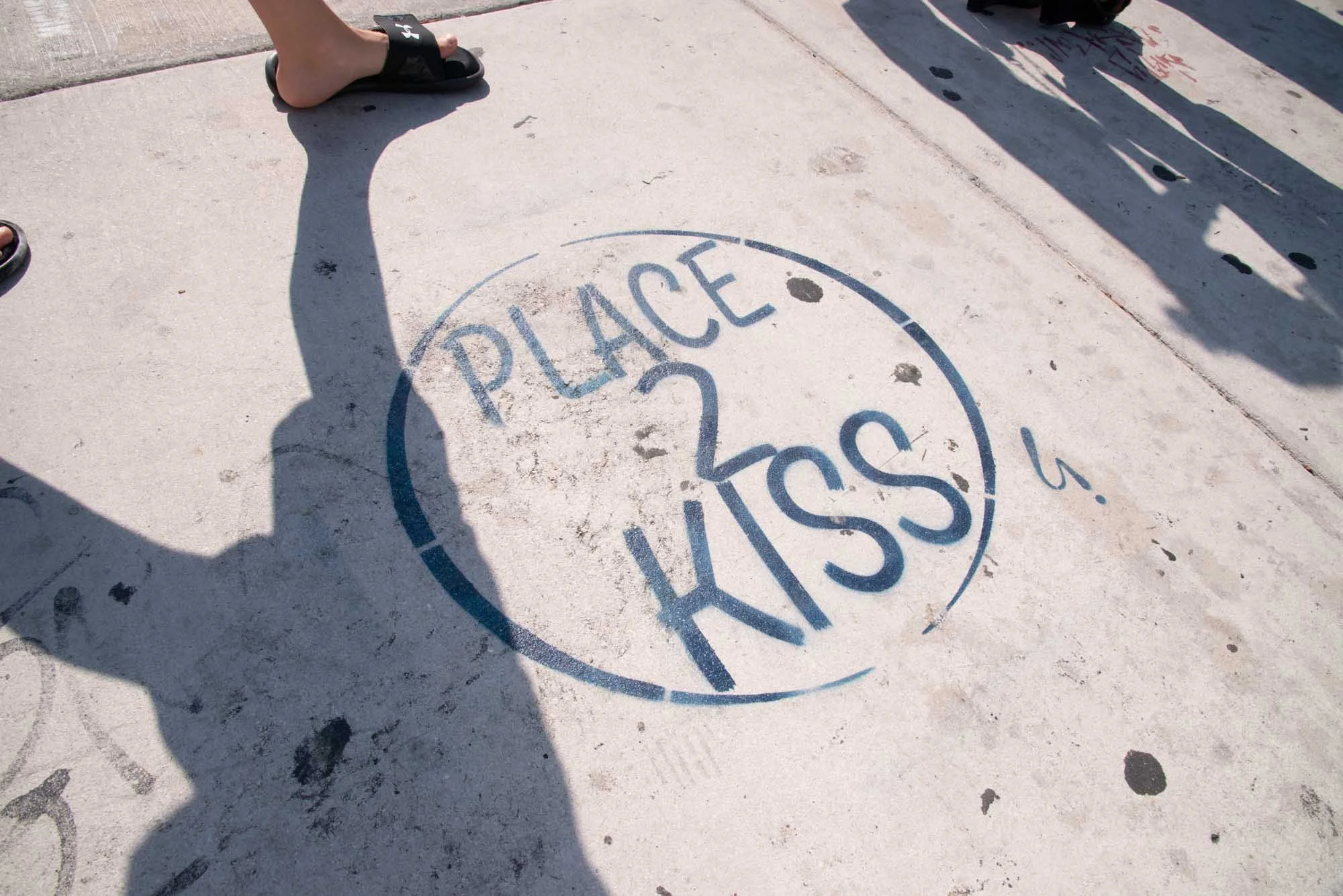
"BE WHAT YOU DREAM." "PARK AT YOUR OWN RISK." "PLACE 2 KISS."
Hand-painted invitations to behave — to dream, to park at your own risk, to kiss in the right place. Three voices speaking from three altitudes: the philosophical, the administrative, the intimate. The literal language of a neighborhood, recorded as it spoke before it was edited.
Three frames from the alphabet.
Then / Now
Same coordinates. Different city.
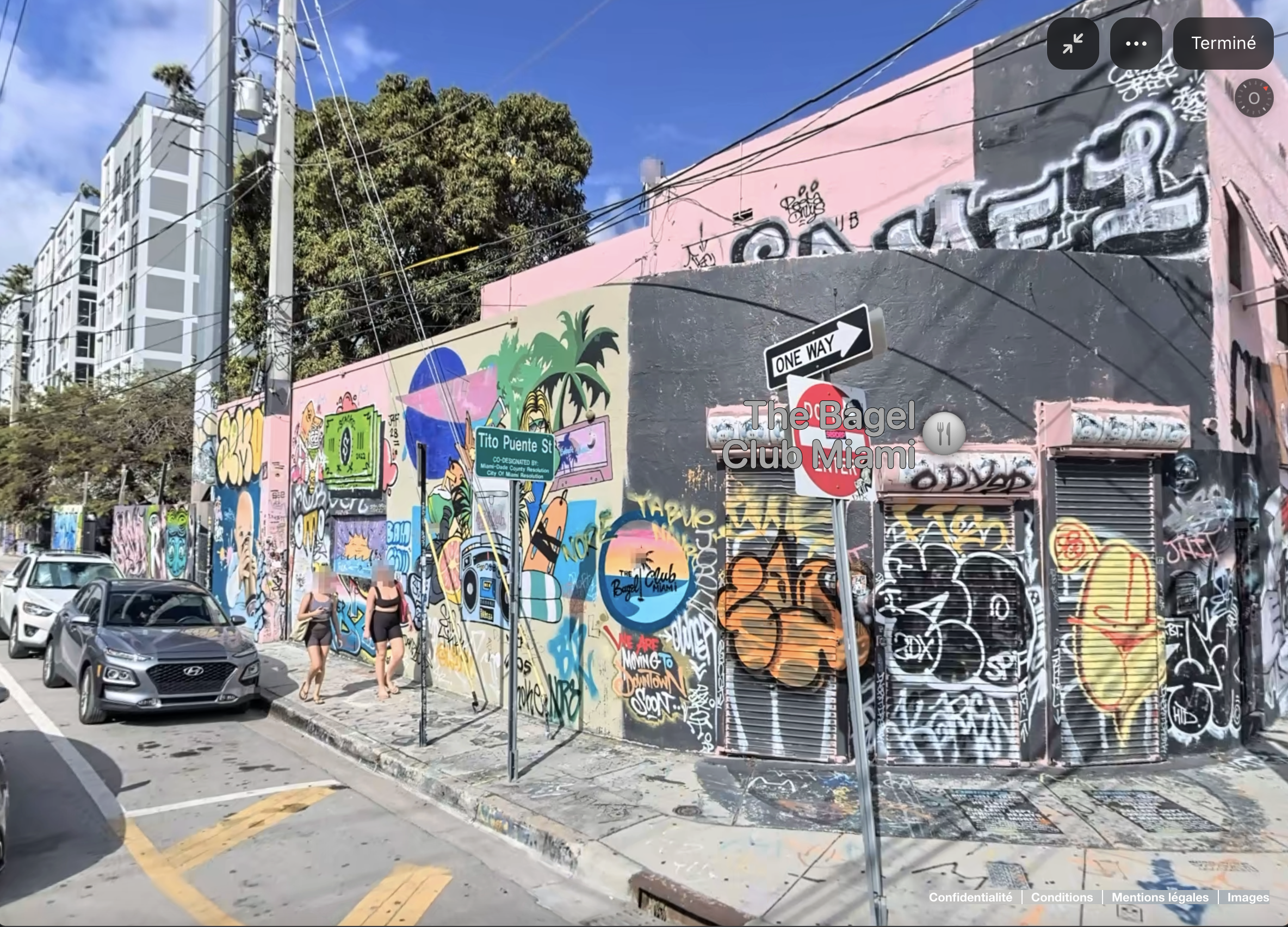
Each pair below sits at one set of GPS coordinates in Wynwood. The left frame is from May 2016 — my photographs from twelve days on the ground. The right frame was looked up via Google Street View and Apple Look Around in 2024–2025. The interval was not edited — every change you see happened on its own.
Some walls were repainted. Some commerce was replaced, then replaced again. One business, in 2024, painted "We Are Moving To Downtown Soon" on the very wall that, in 2016, belonged to a different business that had already moved away. Wynwood archives itself.
Scroll horizontally to walk the corridor →
Methodology
How the survey was made — and how it should be read.
Format
RAW capture, no post-process beyond standard color correction. Frames as taken, not as imagined.
Equipment
One camera. One lens. Twelve days on the ground in Wynwood, May 2016.
Navigation
No GPS metadata embedded. The corridor was indexed by street corners — N 28th × N Miami Avenue, NW 2nd × 25th. The corners are still the only thing I can recognize today.
Attribution
Mural artists are credited where identifiable. Where the work is unsigned or the writer remains unknown, the photograph stands as document, not appropriation.
Consent
Business owners and residents appearing in published frames are contacted in advance. Bilingual EN/ES consent forms are part of the protocol.
Lineage
This survey acknowledges Martha Cooper — whose documentary photographs were exhibited at the Wynwood Walls opening on 3 December 2009 — as direct lineage, alongside Walker Evans, Bernd & Hilla Becher, and Henry Chalfant. Wynwood Chronicles builds on, rather than repeats, that record.
A document. Not a promotion.
CAZEBA · Stories that Matter
I photograph what the world is about to lose.
— លូដូវិច កាហ្សេបា
Wynwood Chronicles is part of a wider survey of vanishing places, repainted surfaces, and lost vernaculars — from Las Vegas casino implosions to Holocaust memorial trains, from Iconic Women erased from history to silent neighborhoods on the edge of redevelopment.
Curators & institutions · private@cazeba.com
Institutional Statement
Wynwood Chronicles is available for museum acquisitions, institutional exhibitions, and curatorial conversations.
Enquiries are welcome.
Ludovic Cazeba · Grimaud, France
For Galleries · Curators · Collectors
Request the Institutional Dossier
The full dossier — extended statement, image inventory, edition architecture, exhibition history, biography — is shared on a per-request basis with verified institutional and private interlocutors.
Request the Dossierprivate@cazeba.com · Response within 72 hours
In Development · Companion Project
Wynwood Voices — a podcast in preparation.
A small series of recorded conversations with the people whose businesses, walls, and presence in the corridor shaped Wynwood between 2014 and today. Specifics will be announced when the first episodes are confirmed.
Coming · 2026Recognition
International Photography Awards (IPA) — Honorable Mention, Advertising & People (2007). Recent IPA recognitions in Landscape and People. Eighteen years of continuous documentary practice.
Lineage
Walker Evans · Bernd & Hilla Becher · Martha Cooper · Henry Chalfant · Denise Scott Brown.
Enquiries
private@cazeba.com
Grimaud · France